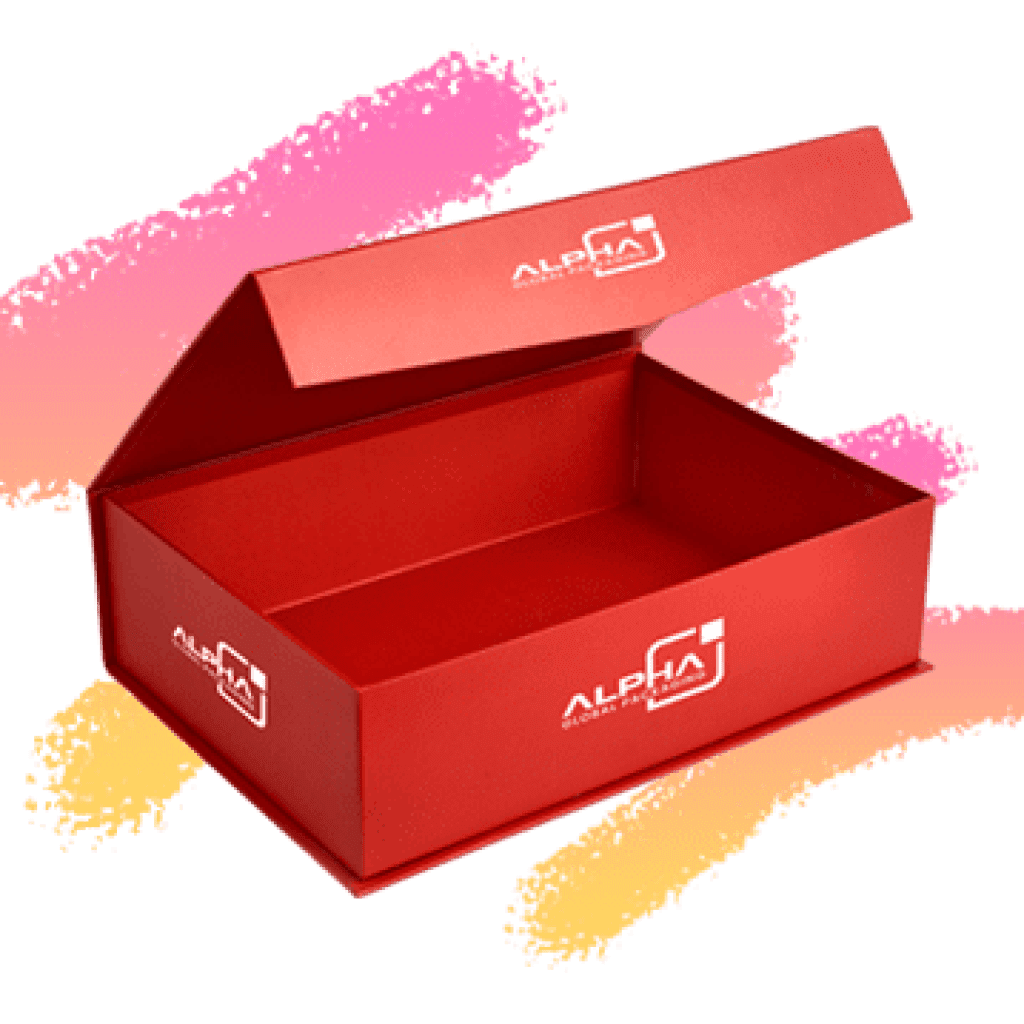

The format decides everything that comes after it
Most buyers choose a rigid box format on how it looks in a photograph and then discover, three weeks later, that the freight costs more than the boxes or that the lid does not hold its shape when the box is stacked in a warehouse. The format is not a design decision. It is a logistics decision with a visual consequence.
There are five rigid box formats used in commercial packaging. Each one solves a different problem, and once you know which problem you actually have, the choice becomes close to automatic.
The five formats, and the problem each one solves
| Format | Problem it solves | Weak point |
|---|---|---|
| Two-piece (lid and base) | Clean, classic presentation at a controlled cost | Two parts to inventory and assemble |
| Magnetic closure | Repeat open and close; feels premium in the hand | Magnet alignment and lid warp |
| Sleeve and tray | Reveal moment; thin profile for shelf and mailer | Sleeve friction and re-insertion fit |
| Collapsible / flat-fold | Rigid presentation without paying to ship air | Setup labor at the filling line |
| Book-style / hinged lid | Attached lid, no separate piece to lose | Hinge wear on heavy lids |
Two-piece rigid boxes: the default for a reason
A lid and a base, wrapped separately. It is the least expensive rigid structure per unit because it uses the least material and the simplest conversion, and it is the most forgiving to produce at volume.
Where it fails is in the hand. A two-piece box that is lifted by the lid alone separates, which reads as cheap. If your product is presented by staff — retail counter, hotel turndown, unboxing on camera — the two-piece is a liability unless the lid fit is tight enough to grip.
Choose it when the box is opened once, on a table, by someone expecting to lift the lid. Custom two-piece rigid boxes cover the standard configurations.
Magnetic closure: the format that gets returned to
A magnetic closure box has a hinged lid held shut by magnets set into the board. The structural advantage is that the box survives being opened repeatedly — which matters when the packaging is part of the product experience rather than a one-time delivery.
The two failure modes are specific and worth knowing before you approve a sample.
Magnet alignment
Magnets are set into the board on both the lid and the base. If the two positions are off by a small margin, the lid pulls sideways instead of closing flat. On a physical sample, close the box ten times and watch whether the lid settles in the same position each time. If it drifts, the magnet placement is wrong and it will not improve at volume.
Lid warp
A large lid on thin board warps over time, especially in dry climates and in air-conditioned retail. Warp is a function of lid span relative to board thickness, not of the wrap. If your lid is wide, ask what board the supplier recommends for that span — and be suspicious of a supplier who quotes your dimensions back without addressing it.
Choose it when the box will be opened more than once, or when the unboxing is part of the marketing. Magnetic closure rigid boxes are the format most often specified when the box is designed to be kept and reopened.
Sleeve and tray: the reveal, with less box
A tray holds the product; a sleeve slides over it. The format uses less board than a two-piece, sits flat on a shelf, and produces a reveal that a lid cannot. It is also the format most often used for rigid-look packaging at a lower material cost.
The failure mode is friction. A sleeve that slides too easily falls off in a bag; one that is too tight cannot be reinserted after opening. Specify the fit as a deliberate parameter — snug on first open, workable on re-close — and test it on the sample rather than accepting it.
Choose it when the product is flat or thin, when shelf presence matters, or when you want a premium reveal without a full-depth box. See rigid sleeve boxes.
Collapsible rigid boxes: the answer to a freight problem
A collapsible rigid box is a genuine rigid box that ships knocked down and sets up into a fixed structure. The board, wrap, and finish are the same. The difference is that you are not paying to move air.
This matters more than most buyers expect. Rigid boxes ship assembled, so freight is billed on volume. A pallet of assembled boxes can be a fraction of the unit count of the same pallet collapsed, and the storage cost follows the same logic.
The trade-off is setup labor. Someone has to form each box at the filling line, which is a real cost if you fill by hand and close to free if you already have a line that handles erected packaging.
Choose it when volume is high, warehouse space is tight, or you are shipping packaging to a fulfillment center rather than to yourself. See collapsible rigid boxes.
Book-style and hinged lids
An attached lid removes the separate-piece problem entirely — nothing to lose, nothing to fit. The constraint is the hinge. On a heavy lid, the hinge is a wear point, and a box designed for repeated opening needs the hinge engineered rather than assumed. Ask how the hinge is reinforced before you approve artwork.
Choosing the right closure
The closure is a separate decision from the format, and it changes the price more than the wrap does.
| Closure | Adds to unit cost | Adds to experience | When it is worth it |
|---|---|---|---|
| Friction lid | Nothing | Minimal | Single-open, cost-sensitive |
| Magnetic | Moderate | High | Repeat-open, gifting, DTC |
| Ribbon tie | Low | Moderate | Gift positioning, low volume |
| Drawer / slide | Moderate | High | Jewelry, accessories, sample sets |
| Sleeve over tray | Low | Moderate to high | Shelf presence, flat product |
Two magnets versus four is a real specification, not a detail. Fewer magnets close softer; more magnets can make a box hard to open with one hand. Ask what the sample uses and test it before you commit to a run.
Inserts decide whether the box works
An insert is the difference between a box that presents a product and a box that rattles. The material choice follows from the product’s weight and fragility.
| Insert material | Best for | What to check on the sample |
|---|---|---|
| Folded paperboard | Light products, cosmetics, candles | Cavity size and edge crush |
| Corrugated | Heavier items needing transit protection | Flute direction and compression |
| EVA foam | Fragile, high-value, multi-piece sets | Cavity tolerance and odor |
| Molded pulp | Fiber-based sustainability claims | Surface finish and dust |
The most common insert failure is designing from a photograph. Send a physical product, or send CAD with the product’s exact envelope. A cavity that is a millimeter too small will not accept the product on a production line, and you will find out at volume.
Format by product category
| Product | Usual format | Why |
|---|---|---|
| Candles and jars | Two-piece or sleeve and tray with a base insert | Weight sits on the base; sleeve gives shelf presence |
| Cosmetics and skincare | Magnetic or drawer | Repeat opening; small footprint |
| Apparel and accessories | Two-piece or magnetic | Fold and tissue presentation |
| Jewelry | Drawer or book-style | Reveal, and the box is often kept |
| Electronics | Magnetic with foam insert | Protection plus repeat access |
| Subscription and DTC | Collapsible | Freight and storage dominate |
For the candle category specifically, rigid candle boxes are built around the base load, which is the same reason most glass products use a tray rather than a sleeve alone.
How to specify a rigid box on one page
Suppliers quote what they are given. A spec sheet that answers these fields returns a comparable quote on the first pass instead of after three rounds of clarification.
| Field | What to write |
|---|---|
| Internal dimensions | Length by width by depth of the cavity, plus clearance required |
| Product | Weight, material, and whether it is fragile |
| Format | Two-piece, magnetic, sleeve and tray, collapsible, or open to recommendation |
| Board | Thickness, or “specify for the load” |
| Wrap | Paper type and weight, or “specify” |
| Print and finish | Foil, emboss, spot UV, soft-touch, matte or gloss lamination |
| Insert | Material, cavity count, and whether a physical product can be sent |
| Quantity | First run, plus expected annual volume if known |
| Delivery | City, and whether pallet or carton packing is needed |
| Date needed | The date the boxes must be usable, not the date to order |
The last field is the one buyers leave out most often, and it determines whether the supplier quotes a schedule that is feasible or simply agrees to one that is not.
The format mistakes that cost the most
Three recur often enough to name. Choosing a sleeve for a heavy product, where the tray carries the load and the sleeve tears at the corner. Choosing a two-piece for a retail environment where staff lift the lid, which separates the box in front of the customer. And choosing an assembled format for a long supply chain without pricing the freight, where the box is right and the delivery economics are not.
The decision sequence that works
- Product weight and shape. This eliminates formats before anything else.
- How many times will it be opened? Once means two-piece. Repeatedly means magnetic or drawer.
- Where does it live? Shelf, bag, warehouse, or courier. Each one changes the structure.
- What does freight cost on the assembled volume? Run this before you fall in love with a format.
- What is the finish budget? Foil and emboss are applied to the wrap, so they do not change the structure — but they change the board grade the wrap needs.
Doing this in order takes an afternoon. Doing it in reverse — choosing the look and working backward — is how packaging programs miss their launch dates.
Where Alpha Global Packaging fits
We quote all five rigid formats. Minimum order is 100 units, standard production runs on 12 to 14 business days, and dielines and 3D mockups are free with no die or plate charges. If you are still deciding whether rigid is the right structure at all, read rigid boxes versus folding cartons first, then come back to the format question.
Browse the full custom rigid box range, or if you already know your product dimensions and quantity, send them through the quote form and we will recommend a format with a specification attached.
Frequently asked questions
Which rigid box format is cheapest?
Two-piece, on unit price, because it uses the least material and the simplest conversion. On landed cost, collapsible often wins at volume because you are not shipping assembled volume.
Do magnetic closure boxes lose their magnetism?
Not in normal use. The failure is placement, not strength — magnets set in the wrong position pull the lid out of alignment. Test the closing action on a physical sample, not a render.
Can a rigid box be recycled?
Rigid boxes are paper-based and recyclable in most curbside programs where paper is accepted, but laminated and foil-finished wraps may not separate. If recyclability is a stated claim, confirm the specific material combination before publishing it.
How much does the format change the price?
More than the print does. Moving from two-piece to magnetic adds material and assembly steps; moving from assembled to collapsible changes the freight line entirely. Get landed cost per format, not unit cost.
Can I mix formats in one order?
Usually only at quantities that justify separate setup for each structure. Ask before designing a range that assumes mixed production.